La Roche-Posay Anthelios Melt-in Milk SPF 60: The Hype…
A dermatologist darling with real pilling, white cast, and greasiness issues — plus the US formula lags far behind what Europe gets.
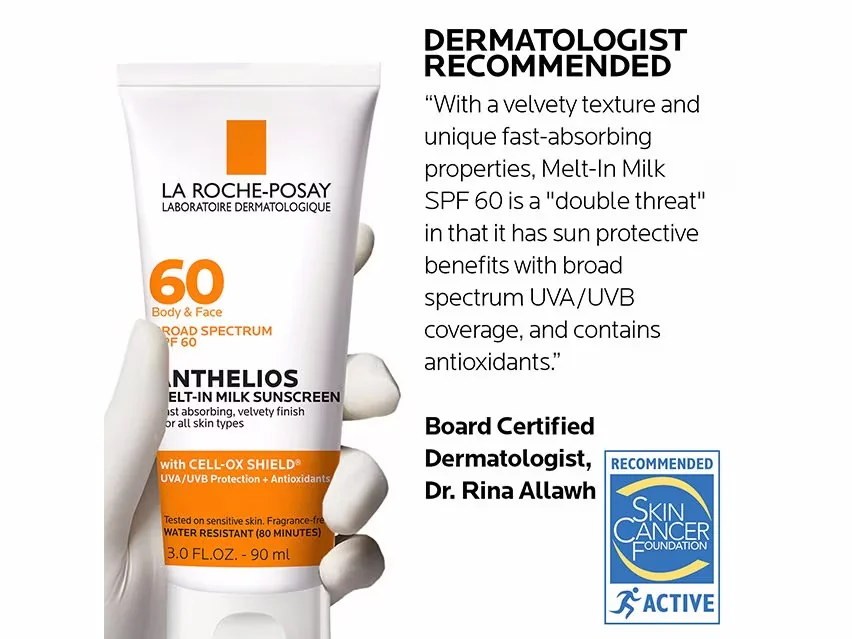
What real owners actually say
Let's be real — this is one of the most hyped sunscreens in existence, and the user experience is all over the map. The people who love it REALLY love it: one former Shiseido loyalist switched on a whim at Target and adores the matte finish and how it feels going on. Consumer Reports gave it top marks for three years running, which has earned it serious loyalty. But here's where it gets messy. Multiple users report pilling — and not subtle pilling, but 'little rolls of product all along my calves' pilling, even on bare skin with no other products underneath. Someone who tried it every which way — with skincare, without, different techniques — still got the same pilling result. Then there's the finish issue: one user says it makes them 'SUPER SHINY/OILY looking' and that people keep telling them they didn't blend in their lotion — except they did. It 'just sits on top of your skin.' For deeper skin tones, the white cast is real: a Fitzpatrick V user got a 'shiny white cast.' The smell divides people too — some find it 'mild and nice,' others call it 'a little weird.' And the eye sting — oh, the eye sting. 'Stings my eyes like all hell' is not a minor complaint. Price is a constant grumble: 'the price does not agree with my wallet' is the most upvoted comment. People are literally coupon-stacking at CVS to get it under $10. Also worth noting: it's apparently NOT reef safe and is banned in Hawaii, which nobody talks about until you're already at checkout.
What Glow loved
- Dermatologist-favorite with strong Consumer Reports track record
- Matte finish that works beautifully for some — especially former Shiseido users
- Widely available at Target, CVS, and drugstores with frequent coupons
- Pleasant texture that feels good going on for many
What Glow didn't
- Pilling is a significant recurring issue, even on bare skin
- US formulation uses older UV filters comparable to drugstore alternatives at a fraction of the price
- White cast on deeper skin tones (Fitzpatrick IV-VI)
- Eye stinging reported by multiple users
- Not reef-safe — banned in Hawaii
The YouTube reviewers who actually tried it
The YouTube landscape tells a fascinating two-story narrative. On one hand, dermatologist creators consistently recommend La Roche-Posay sunscreens — Dr Dray features multiple Anthelios products across her top picks, praising specific formulations for being non-greasy, water-resistant, and sensitive-skin-friendly. DermAngelo did a dedicated Melt-in Milk review where commenters shared genuine love ('my granny's fave'). But the more you dig, the more the US-versus-EU formulation gap becomes the elephant in the room. One commenter on Dr Muneeb Shah's video puts it bluntly: the US version uses Avobenzone, Homosalate, Octisalate, and Octocrylene — 'the exact UV filters you find in sunscreen from Walmart' — and spending $30 on them makes little sense when Europe's UVMune 400 line features Mexoryl 400, SX, XL, and Tinosorb S. Multiple commenters across Abbey Yung's and Dr Dray's videos echo this: 'The EU versions are amazing,' 'I buy my European sunscreens on eBay,' and 'the UVMune range is the only one I would be interested in.' The Madi Prettyman first-impressions video drew a commenter who balked at '$25 for 3oz like that's a good deal.' A user on taraMD's try-on video reported it 'left my face looking kind of grayish.' Dr Dray even coined the term 'the blurry eye phenomenon' — that telltale sunscreen creep into your eyes — which multiple viewers related to hard. The brand's constant renaming and near-identical packaging also frustrates: one commenter on Doctorly's review said 'you have to read every little bit of text on them to check you got the right one.'
The caveats nobody puts on the bottle
When user voice and video reviewers contradict each other, that's usually where the truth lives. Here's the disagreement.
- USER comments cite Consumer Reports' top-3-year rating as proof of quality, but multiple USER comments report pilling, greasiness, white cast, and eye stinging — the same product delivering wildly different experiences.
- VIDEO reviewers and commenters repeatedly note the US formulation uses basic UV filters found in $8 drugstore sunscreens, undermining the premium $25-30 price point that USER comments also complain about.
- USER comments are split on finish — some call it 'matte' and love it, others say it makes them 'SUPER SHINY/OILY' — suggesting either batch inconsistency or extreme skin-type dependence that marketing never acknowledges.
- VIDEO commenters strongly prefer EU/Asian LRP formulations with modern filters (Mexoryl, Tinosorb), creating a tension where the 'best' version of this product isn't the one most USER commenters are buying at Target and CVS.
- USER comments flag it as not reef-safe and banned in Hawaii — a real-world limitation that VIDEO reviews focused on performance and dermatology credentials don't address.
- USER comments report severe eye stinging while VIDEO reviewers (Dr Dray) praise specific Anthelios formulations as not burning eyes — but with LRP's confusingly similar product names, users may be getting a different formula than intended.
The 8 videos that informed this verdict
Top YouTube reviews ranked by views. Tap a card to watch on YouTube — no autoplay, no creep tracking, no “you might also like.”